Bloom
An excerpt from my hybrid memoir-biography that I'm currently pitching. This chapter is about taking care of a wound in a dying patient while my first pregnancy began to falter and fail.

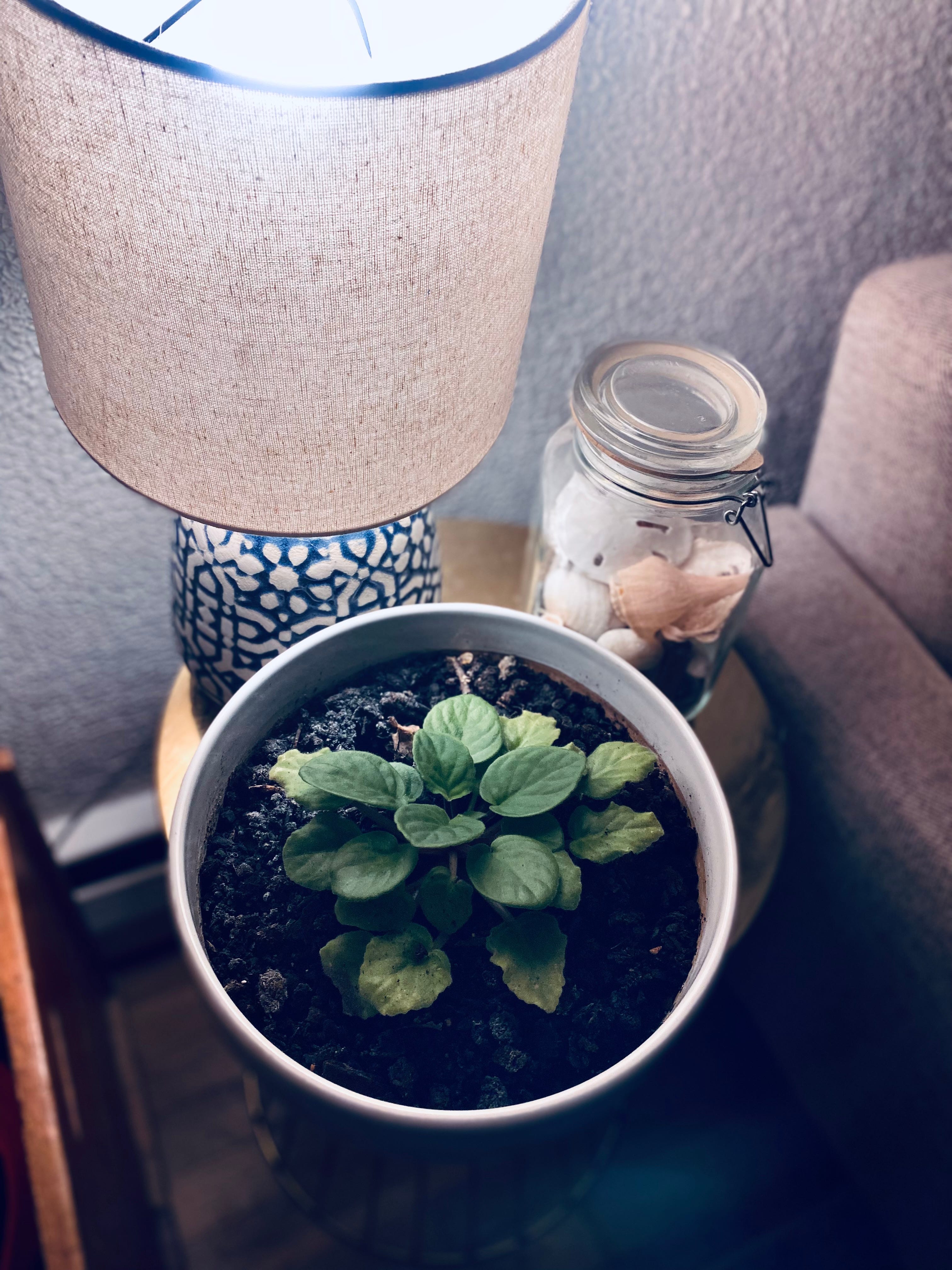
Mrs. D. was a tough case. It took me weeks to get her to warm up to me, weeks more before she’d take any of my advice about how to manage her pain, her weakness, her breathing. Finally, one day she gave me an African violet, a propagation from a collection of African violets she had all over the back side of the house, all of them blooming hot pink flowers, their furry leaves warm from the lowering late-day sunshine that streamed through slanted skylights overhead. I wasn’t much of a plant person, but I took it anyway. I was just so happy she was letting me care for her. I should have known that her acquiescence wasn’t thanks to my doggedness or my skill. She had begun to fail, for good this time. She was weak, and getting weaker by the day.
Mrs. D. was so often on her back, either in bed or in a wheelchair, that she developed a wound, a bedsore, at her sacrum, the bony spot at the base of her spine. It’s a common location for bedsores: as disease progresses, whether it be cancer or dementia or something else, patients’ fat and muscle wither away. With nothing to cushion the bone, it becomes like a tourniquet on the skin, cutting off all circulation. No blood can flow there. The tissue begins to die, and the patient gets a wound. Wound, from the Latin vulnis, as in vulnerable. She was. And so, the wound began to bloom, just as magnificent as her violets.
Wounds in nursing are categorized according to their thickness, and different wounds require different interventions. Stage one wounds are when the skin is red but intact, a pink bruise that doesn’t go away. Usually, we can simply rub thick cream on it or turn the patient more frequently onto his side so as to keep the pressure off it and allow blood to flow, or maybe put a thick, cushiony bandage over it to protect it. Stage two wounds are when the skin is broken but the base of the wound is pink and healthy. It might heal if only the pressure can be relieved. We nurses apply a bandage of some kind, plus some cream.
Stage three wounds are more serious. The wound goes deep into the skin, through the fatty layer. Maybe there is one spot of the wound that is deeper than the rest, that burrows down under the healthy skin, like a deer’s den hidden beneath the bramble. We call that tunneling, or undermining. These wounds might get infected. They might need special creams, and other special creams around their perimeter, to keep the wounds edges from succumbing, from sinking into the hole of the wound. They are hard to heal in a patient who is regaining strength, for instance someone recovering from injury, and nearly impossible to heal in the setting of a person whose strength is waning. They can be painful, if the nerves around the wound haven’t died off yet. They can smell and ooze.
But stage four wounds are the worst. They show the patient’s bone. They fester. They get bigger and bigger, the size of your fist, then the size of your open hand, then the size of your head. We pack them with gauze to absorb the exudate and soak the gauze in a bleach solution to kill the bacteria that makes them reek. They are nearly impossible to heal, especially in a dying patient, especially in someone’s home, versus a hospital setting. In a patient not on hospice, they might need surgery called debridement to remove the black, necrotic tissue that builds up inside them. Necrotic, from the Greek necrosis: a state of death. In the home, where surgical debridement isn’t possibly, we simply hope for the best.
As the weeks progressed, Mrs. D.’s became that kind. It was a state of death that bore into her backside like a womb. My task, then, became not just to check her vital signs, refill her meds, listen to her husband’s concerns, but to dress the wound. I arrived several times a week, more if needed, for instance if the drainage had soaked through the thick gauze I’d placed to catch it, or if the smell had become unbearable. She was mostly in bed now, and thin enough that I could roll her over and hold her sideways with one hand while I worked on her back.
“Thank you,” she whispered one day, facing the wall. “Thank you.”
She was crying. She was weak. The anger was gone at last, and she had begun to hope, again. Not for life. Not for healing. For a good death. That it would come, and soon.
Finally, things seemed to be out of control. “I think we should bring her into the hospice house,” I said to her husband Drew one day after changing her wound. The hospice house was an eight-bed inpatient unit a few towns over where patients could receive around-the-clock care from nurses and aides and an on-site nurse practitioner. Nurses there could start intravenous lines of pain and anxiety medications, much more effective than the by-mouth versions of morphine and lorazepam that we used in the home. Mrs. D.’s wound by then was stinking, black and putrid. It hurt her, when the morphine wore off, and it hurt her to think of it there, when she remembered, and it hurt her husband for it to be there, too. It made its own terrible weather, that wound. It filled the air literally and figuratively with a reminder of its presence. No one could rest easy knowing it was there. It leaked through the dressing so often now that Drew was changing the pads himself when I couldn’t get there fast enough.
“I think we need to let the nurses there take care of this wound for you,” I said. “This is too much.”
But she wouldn’t go. Not yet. Sending a patient was not like sending them to the hospital—no one at hospice house would be trying to save a life. It was a comfortable, welcoming space. But it was not home, and Mrs. D. wanted to be home for as long as she could.
That meant that it was still my job, week after week, to change the dressings. I wheeled her into the bedroom if she wasn’t there already and lifted her up and shifted her over onto the bed, and then pushed her thin, bony, ruined body over. I emptied the catheter of urine, wiped her down, performed the dressing change as best I could and then covered her with blankets, smoothing them over her, knowing that they were concealing something terrible. I measured her morphine, ordered more. I called the social worker, asked her to make a visit. I put my hand on Mrs. D.’s wrist and felt her pulse, tiny, fading. I stood on the stoop with her husband who held the wrought-iron railing tightly, steadying himself. He was at the edge of a new life, one that he didn’t want, hadn’t asked for, but would get all the same. I reminded him for the hundredth time to call the on-call service if he needed anything, anything at all, or if he had any questions, or if she died. We would come and pronounce her, I said, and the funeral home would come straight to the house to pick her up. There was no need to call 911 or anyone else.
“Okay”, he said. “Okay.” I wrote in the note, as I always did, On-call numbers and procedure reviewed, patient’s spouse verbalized understanding. Emotional support provided.
I drove away. Death licked at my tires as I went. It would be a relief when she died, I thought. For all of us.
I gave up on her. In my heart, I no longer had the energy to care about whether her death was good or bad. I didn’t even know what a good death was anymore—was it quick, with no chance to say goodbye? Was it slow, with every chance? Was it painless? Was it a death that required your loved ones to help you, to show you how deeply they love you? Was it a death that happened before your heart really even started beating, before you even had the chance to live?
In the end, another nurse persuaded Mrs. D. and her husband to finally go to the hospice house. I can’t remember the last time I saw Mrs. D., but she died before the end of November, before I knew for sure that my pregnancy was no more. Sometimes I did visit patients in the hospice house, at the end. It seems that I would have, given how close I was to her husband. But no image of her in that setting comes to mind. I can only see her in her living room at home, with her eyes closed, half asleep, her face drooping. I can see her husband, tall and thin, hollow-eyed, smoking on the front stoop. And I can see myself, sitting in my car in her driveway, wishing I wouldn’t have to visit her anymore, though of course that would only be possible when she was no longer there to visit. When she died. All I could think about was my own suffering, my own anger, my own resentment at the way I was giving and giving and never getting anything back except a few fucking African violets.
I was no angel, and Mrs. D. knew that, just as my dead knew. They wanted me in their employ forever, beholden to their wishes alone. They’d had their cold fingers on my shoulder for as long as I could remember. They’d marked me for this work of tending to the dying, and they’d closed off everything else—motherhood, more. And the fucked up thing was that I couldn’t even do the job very well. Mrs. D. had suffered, and suffered mightily, while in my care, and I’d spent the better part of her suffering worrying about myself and resenting her for making me feel inadequate.
I remember a thought I had one day as I tended to her wound and felt my own pregnancy fading inside me, felt the life draining from all three of us, slowly. I thought, If this baby inside me lives, I will name it after Mrs. D. To honor her. To remind me of her. To remind me of my selfishness, of the way I resented the anger that was her right. To remind me to be humble.
If this baby lives, I thought. Let it live. Please, God, let it live.
She didn’t. The baby. She died, like Mrs. D. But I still remember. And I still have the violets. And they still bloom.
This took my breath. The violets, the wound, the resentment, the rueful honesty—every line was alive with ache. “It made its own terrible weather.” That stayed with me.
I’m Kelly, a writer and slow traveler. Thank you for your service. For showing us the impossibility of being everything, and the grace that grows in spite of it.
I would read your book in a heartbeat. Please write it. In the meantime, I shared something about remembering who we are and what blooms in us, even after loss:
https://substack.com/@thebenthalls/note/p-161241875?utm_source=notes-share-action&r=5ci1ff
Sending deep respect and hope to cross paths again in your words.